Connecting Scriptures: Jude 1:14, Micah 6:8, Hebrews 11:5, Psalm 78:39, Psalm 14:2-3, Jeremiah 17:9, Romans 3:23, Romans 5:12, Numbers 23:19, Hebrews 11:7
To be clear, I read these chapters over two separate days. I often have a bit of turmoil when it comes to lineage passages in the Bible. I have to really will myself to focus and not glaze over them—because they matter. They wouldn’t be included if they didn’t. The names and years listed here are significant enough for God to inspire Moses with each man who passed before time (By the way, Moses was inspired by God to complete these first five books of the Bible if you didn’t already know, he had a lot of time to do this wandering in the desert for 40 years. Let’s not get ahead of ourselves.). I am saying this mostly for myself, as I will have to dig deep again in Numbers and Matthew and Luke as the lists of names grow.
Chapter 5 begins with a reminder that man created Adam and Eve in His image. It in turn states that Adam fathered a son in his own image, Seth. The son that lived. While the same language is used, this image is different from the one that God gave. This image is the one that was marred by sin. This is the curse that passes on to all mankind and it is what we all must reckon with.
I also notice the length of years each man lived. At first glance, I am impressed! What would I do with 900 years? I think we’d all like to believe we would accomplish great things with that kind of time. However, I think that these passing years show that all man can accomplish is deeper and darker sin. So much so, that Chapter 6 will require a “slate wiping” because of man’s growth in corruption. To live 900 plus years in a world of sin and suffering doesn’t sound like a life I want to endure. So, when I think on Enoch who is considered a man who “walked with God” and the number of his years—do you think it was mercy? He lived a third of the life of his ancestors and lineage. Was being removed from the brokenness of the earth his reward?
Then comes Noah through Lamech. His name means “rest” and “relief”. In a time that never saw rest and only constant toil, rest must have been an extreme concept. Today, we observe Sabbath as a way to show the world and our own hearts whom we trust. Sabbath rest depends on God to supply every need and it gives us an opportunity to live by faith. Sabbath is a quiet way that we can grow spiritually. In Noah’s day, and long after, the people would not have this door open to them. The curse of Adam to toil and fight the earth to live was their daily bread.
If you begin Chapter 6 and, after re-reading it multiple times, are completely perplexed—join the club. I am still praying for comprehension of Nephilim and the sons of God. All I can surmise is its context. Verse 5 is the result of all the evil goings on between man and woman, giant sized or fallen angels. Because of mankind’s continual evil, God’s heart is deeply pained. The Hebrew here, in verses 6 and 7, “…the LORD regretted that he had made man on the earth…” and, “…for I am sorry I have made them.” is naham. This may come off to the reader as if God regretted his creation in a way that shows an unknowing on his part. For us, we feel regret over wrong doing and that is natural. God is however, not a man. He is all goodness and He doesn’t make bad or wrong choices that plague Him in the night. So, what is this? I believe it is a glimpse of Our Great God suffering on the worlds behalf. He sees how far sin has taken man and woman, in what is a small span of time, and it brings Him grief.
Then God sees Noah. Let’s go ahead and set this precedent. There are no heroes to be found in the sons of Adam in God’s word. No, not one. There are mighty men and women, but they are all sinners in need of saving. There is only one true hero, and He is the one all history hinges on (hint, its Jesus).
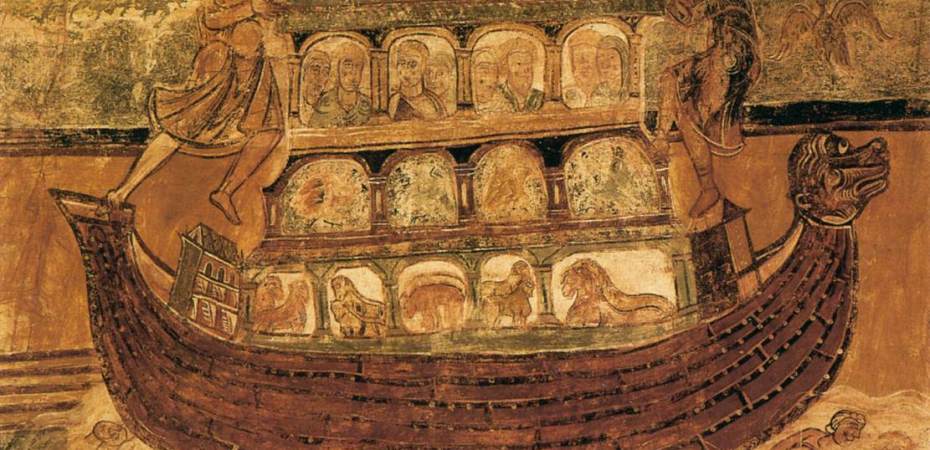
Noah is described as being righteous and blameless in his generation. It also uses the same language it used for his grandfather Enoch—Noah walked with God. Noah was not perfect, he just understood who to run to in his imperfection. Because of this, God sees and calls out to Noah to do something radical. He wanted him to build a boat. God was gracious to give very specific parameters and materials and time. Noah would be building this ark for 100 years. Maybe in his walking with God, they had talked about the devastation mankind had brought upon the world. Maybe Noah understood God’s heart and plan. Whatever it was, the Bible tells us that Noah “did all that God commanded him.” (Verse 22). No “but if’s” no “let’s wait”, no “that’s impossible”. Just plain, straightforward obedience. That is what knowing God’s character will do to you. It makes you brave and ready to run with the commands of God. It makes you ready to receive promises and provision.
Questions for Reflection:
1. How does the reality of the longevity of man and his sin compare to the general belief that man is good if left alone?
2. Have you ever been grieved by another’s sin in a way that reflects God’s heart in these passages? What about your own sin?

 thelifeabundant.org